How to manage your plantar fasciitis
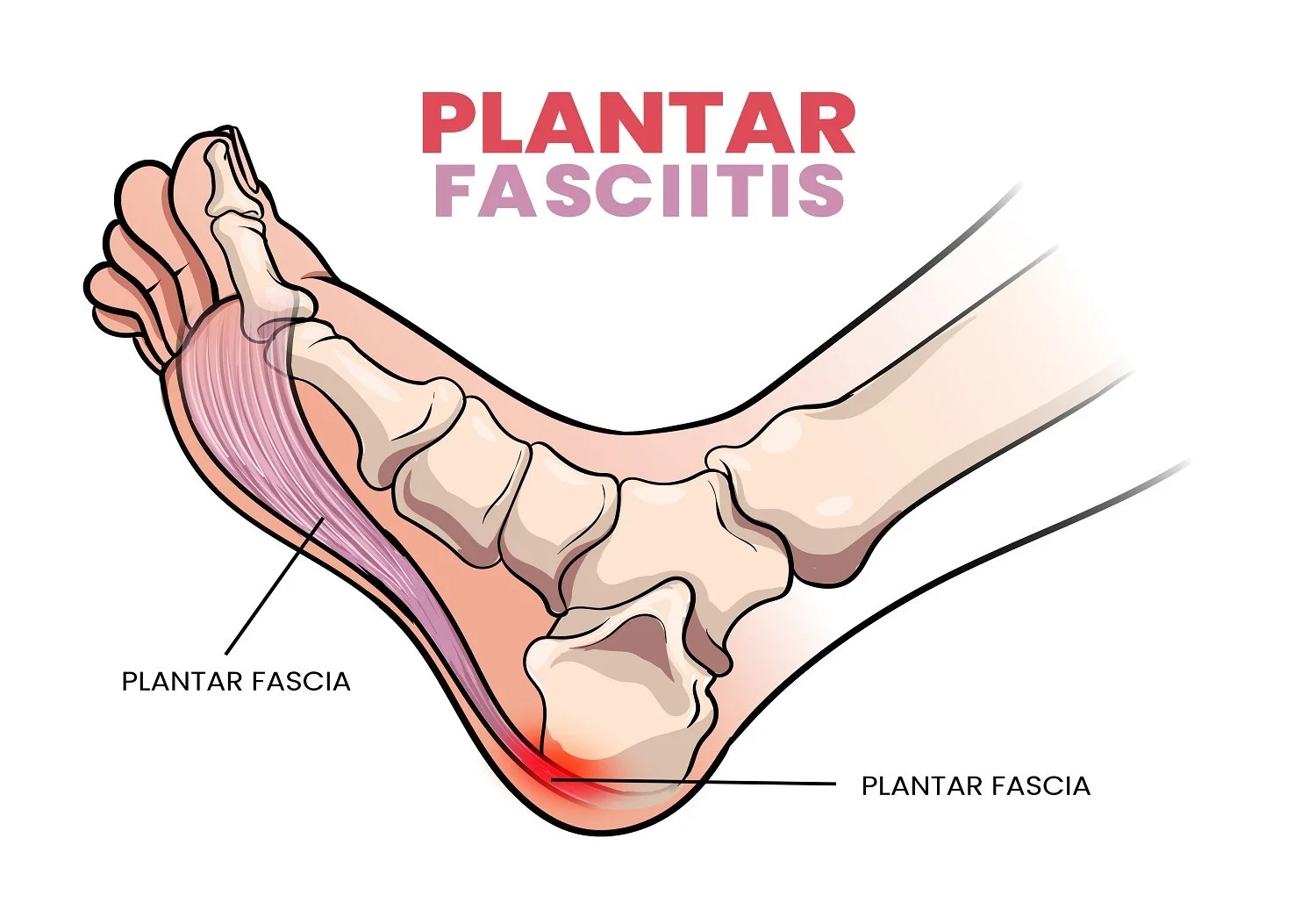
Plantar fasciitis is often due to overuse or too much stress on the feet. However, it does not have to stop you in your tracks and sideline you from the things you love to do!
Plantar fasciitis, is inflammation of the plantar fascia, fascia that runs along the plantar aspect or bottom aspect of our foot. If you have ever suffered from plantar fasciitis, you’re not ALONE, it is the MOST COMMON cause of heel pain! In fact, more than 2 million people in the US alone are treated for it annually!
The plantar fascia is a strong, fibrous band, similar to a ligament that travels from the heel to the ball of your foot and into the toes. It is elastic similar to a thick rubber band. It helps form the arch of your foot.
Plantar fasciitis, occurs when the fascia is over used or overstretched, causing inflammation. This inflammation can cause pain in the foot, often most severe at the heel, and makes walking, running and even standing painful and difficult.
Plantar Fasciitis often presents as heel pain, pain along the arch of the foot and can often present with stiffness as well swelling in the heel as well as pain and tightness in the calf and Achilles tendon. The pain is often a constant dull ache, but can become sharp after using the affected foot. The pain may actually improve temporarily during movement and exercise, before, it gets worse once you stop.
The diagnosis is often made clinically by obtain a detailed history and performing some physical exam tests. Special test such as x-ray, MRI or MSK ultrasound may aid in the diagnosis, but are generally not needed, at least to initially manage it conservatively.
Traditional treatment recommendations include NSAIDs, and ice/rest. Other treatments include immobilizations, manual therapy including cupping or Instrument Assisted Soft Tissue Mobilization (IASTM), dry needling and shockwave are also effective conservative treatments. Lastly, there are more invasive treatments including corticosteroids both oral and injections, as well as PRP injections and even surgery in non-responsive cases. However, MOST cases of plantar fasciitis can be treated conservatively.
Generally, manual therapy COMBINED with a home exercise program produces the best results. IASTM has demonstrated moderate efficacy in managing plantar fasciitis. However, as mentioned, when combined with stretching exercises it shows a higher effect size. Additionally, a 2024 meta -analysis of 12 RCTs (781 patients) found dry needling when combined with routine treatments significantly reduced pain score and improved Foot Functional Index scores.
When comparing the effectiveness of dry needling it has been shown to produce similar results to shockwave therapy while it has been shown to produce MORE SUSTAINED BENEFITS THAN CORTICOSTEROID INJECTIONS! Overall, conservative treatments combining manual therapies and home exercise comparable to superior long-term outcomes!
So you may be asking yourself, what can I do at home right now to help with my plantar fasciitis, and we are HERE TO HELP!
exercises and stretches to treat your plantar fasciitis:
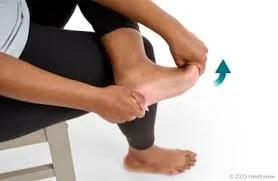
First thing in the morning, even before getting out of bed, stretch your plantar fascia! Do this by grabbing your heel and putting your ankle into dorsiflexion, you should feels stretch in your calf. THEN, grab your big toe, and pull it into dorsi flexion as well, this will help to stretch the plantar fascia as it runs along the bottom of your foot! Continue to release and pull your great toe a few seconds at at time for 20 reps!
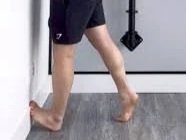
2. Next, AS SOON as you get out of bed, go over to the wall, and continue the stretch. Put your toes on the wall in dorsiflexion, while your ankle is in dorsiflexion, this will help stretch both the Achilles tendon, the calf muscles as well the plantar fascia itself! Perform this one for a couple reps holding 30 seconds each. To improve the stretch even more…. slightly supinate the foot, putting more pressure on the outside 3 toes of your foot. Your foot is more rigid in this slightly supinated position, allowing a better lever to project you forward while walking.
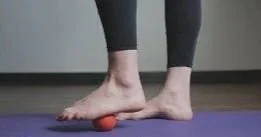
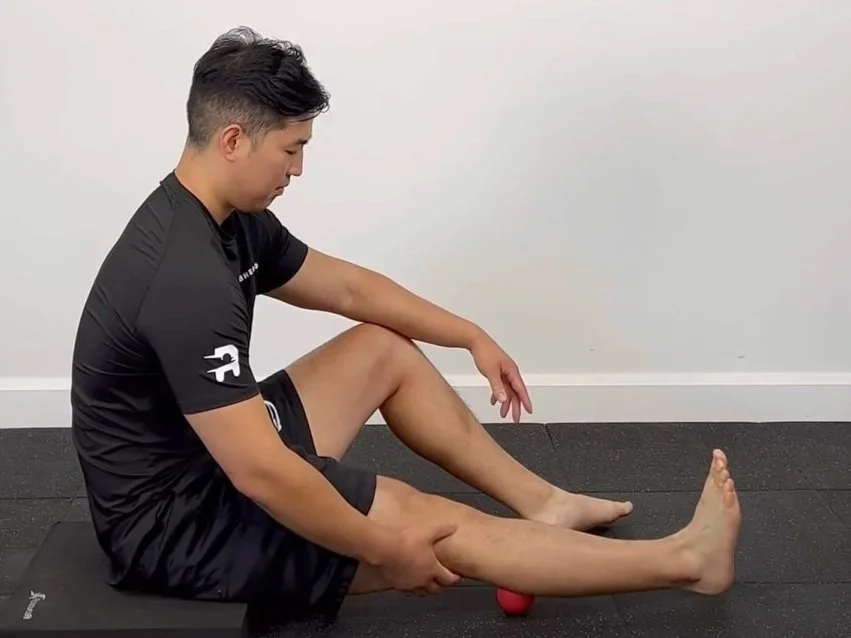
3. If you’re at all familiar with plantar fasciitis, you’ve probably been told… to use a golf ball, tennis ball or lacrosse ball to “break” up the tissue causing your plantar fasciitis. “Breaking” up tissue seems a bit extreme, and most people tell you to put as much force and pressure through the ball and foot as you can stand to “break” up that tissue…. WELL, the science has shown this is really just causing unnecessary pain… why? Well, because we aren’t really breaking anything up. BUT that doesn’t mean this technique can’t be beneficial, but instead of using as much force as you can stand, use mild to moderate force to help massage the tissue, DONT overload it causing even more inflammation! OH, and while your at it… repeat this with the calf muscles too!
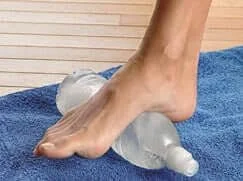
4. Now your plantar fascia is woken up and stretched a bit, you’re ready to head off to work, or whatever your day calls for. BUT, before you leave for the day throw a plastic water bottle in the FREEZER, your plantar fascia, will thank you later! Again, plantar fasciitis, is INFLAMMATION of the plantar fascia, meaning there is likely to be some heat, possible some swelling and of course pain, all part of our inflammatory process. A good way to calm this down a bit after a long day on our feet, or after a run is is treat it to some ice. So when you get home pull that bottle out of the freezer and roll your plantar fascia across it for a few minutes to calm down some of that inflammation!
The above stretches and release techniques are greats ways to provide some immediate relief. HOWEVER, if you stop there it will likely continue to come back! To put plantar fasciitis behind us, we need to build up our foot muscles!
Strengthing exercises to keep your plantar fasciitis away! We need to introduce progressive loading!
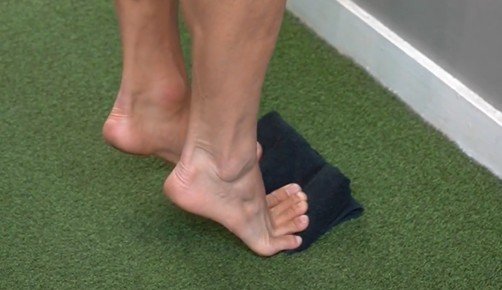
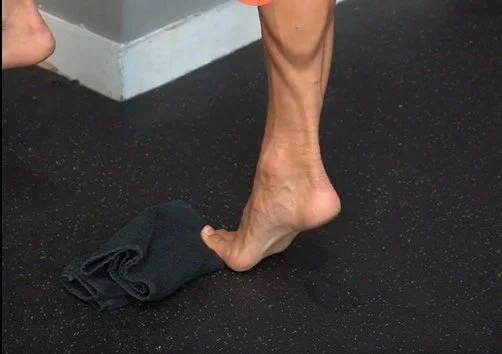
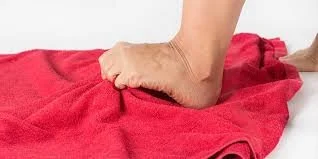
1. A great and simple way to build strength in both the foot and calf is to do simple toe extension calf raises! Using a towel roll or fold it slightly introducing slight dorsiflexion of the toes (even prior to lifting off), then perform a calf raise! Remember, with this we can to go straight up and down, sometimes we have the tendency to shift forward. With this go straight VERTICLE. To begin, you may need to offload some of the weight with your unaffected side. However, as we progress with want to transition to a single leg calf raise, maybe even adding in some weight!
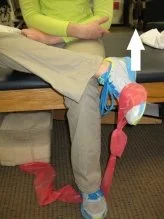
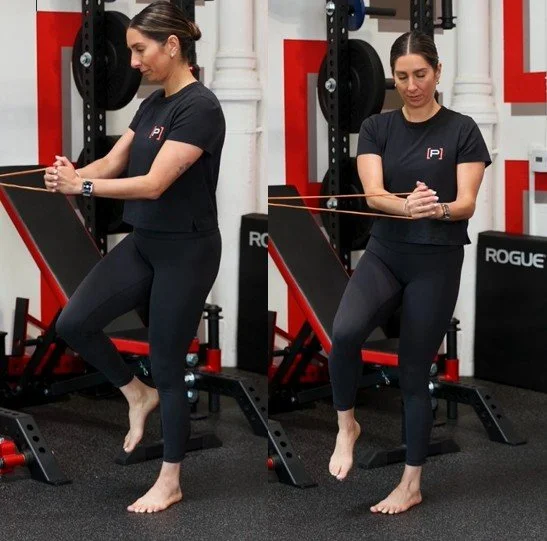
2. Pronation and supination of the foot and ankle are key in proper foot mechanics including simple walking, standing and running. One way to address this is to take a bit of a step away from the ankle and build up our tibialis posterior. This muscle can be strengthened through resisted ankle inversion. First, start non-weightbearing before progressing into weightbearing. PROGRESSIVE LOADING!
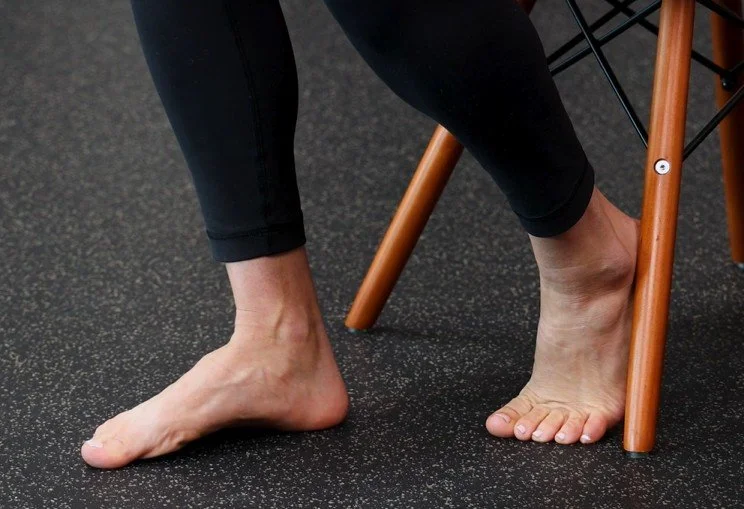
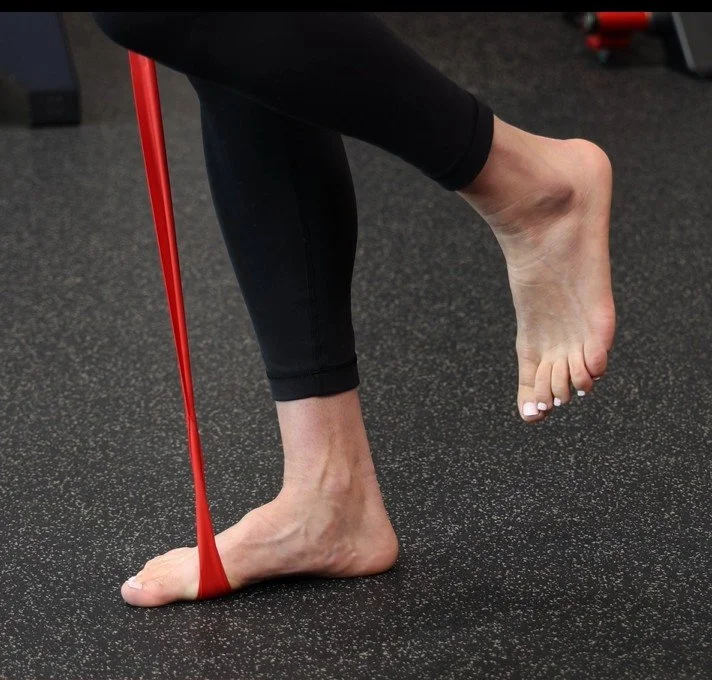
3. Lastly, we need to build up strength in our deep intrinsic foot muscles to help support our arch and evening distribute force throughout the foot and plantar fascia. For this you can start seated and “squeeze” the floor, one way to train yourself on this movement, it using your toes to roll up a towel. Then progress to standing and eventually, add resistance with a band.
We hope these stretches, and exercises will help you kick that plantar fasciitis out the door! However, remember, studies have shown that the best results comes from a comprehensive treatment which includes rehab exercises with manual therapies and treatments including joint manipulation or mobilizations, cupping, dry needling etc. So if you’re suffering from nagging plantar fasciitis, we are here to help! Click the link below to book your evaluation and treatment!