The Common Causes of Upper Back Pain, and Effective Solutions!
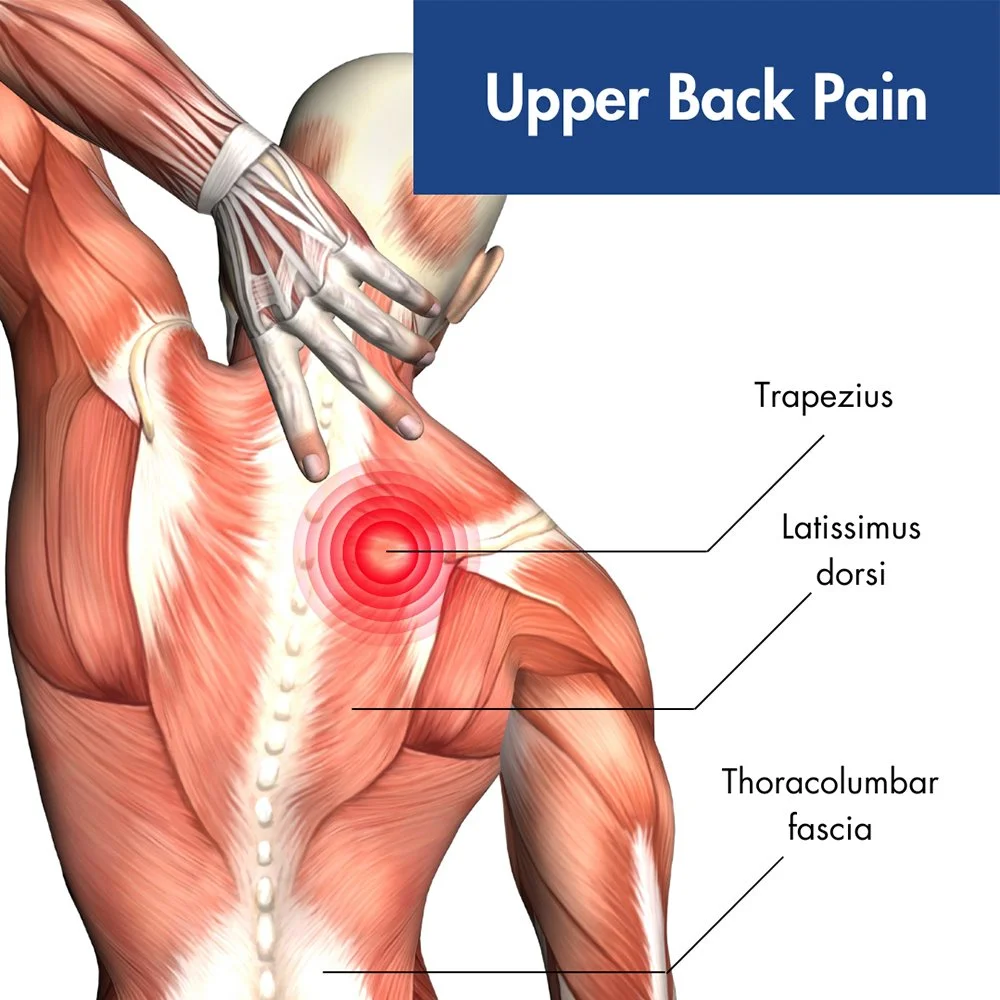

We always hear about low back pain, and rightfully so, it’s one of the leading causes of disability in the US and worldwide, and is one of the most common reasons patients seek medical care.
However, upper back pain can be just as difficult to deal with when in strikes. Also, with our continued emergence of technology desk jobs with computer work and cell-phone texting is more and more common and can lead to more and more issues.
Upper back pain can often present as a nagging ache between your shoulder blades or as stiffness that comes on after a long day of work. Just like low back pain, upper back pain can limit your mobility negatively impacting your quality of life.
What is the Cause of Upper Back Pain?
Our thoracic spine (the mid and upper part of our back) plays a vital role in posture and is plays key rolls in rotation and even breathing! With our more modern lifestyles, the thoracic spine is often underused and overstrained.
Some common causes of mid and upper back pain include:
Poor posture: Slouching, forward head carriage, and forward rounded shoulders compress the thoracic spine.
Prolonged sitting: Long hours at a desk or behind the wheel result in decreased spinal movement and weaken the supporting muscles.
Muscle imbalances: Most of what we do is in front of us (texting, computer work, driving etc.) this results in tight chest muscles and weak upper back muscles, this results in an imbalance of the shoulder complex.
Lack of mobility: A stiff thoracic spine makes everyday tasks like reaching, lifting, and rotating more difficult—and more painful.
Stress and tension: Emotional stress often manifests physically in the neck, shoulders, and upper back.
Overtime these daily parts of life create persistent strain on our upper back muscles and joints, resulting in chronic tightness leading to tension headaches, shoulder pain and even cause cause pain or difficulty breathing!
The good news? We don’t have to have perfect posture, we just need more variety and movement throughout the day, something like a sit to stand desk can be great!
The best way to address mid and upper back pain is to restore proper mobility, and reinforce healthy posture to effectively reduce stiffness in the thoracic spine and shoulders.
Here Are Some Simple, but Effective Exercises to Restore Mobility:
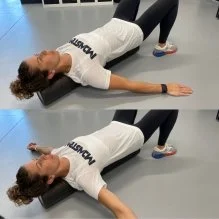
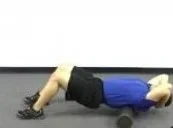
1. Thoracic Spine Opener
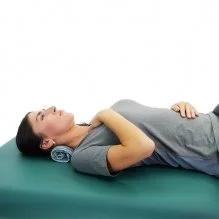
Use a foam roller or double lacrosse ball (peanut) to mobilize the mid-back.
Lie on the roller placed under your shoulder blades, support your head, and gently extend over the roller for 1–2 minutes.
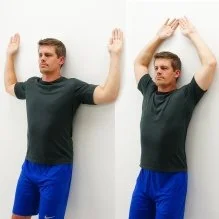
2. Wall Angels
Stand with your back against a wall, arms in a “goal post” position.
Slide your arms up and down while keeping your back and arms in contact with the wall.
Great for shoulder posture and upper back control.
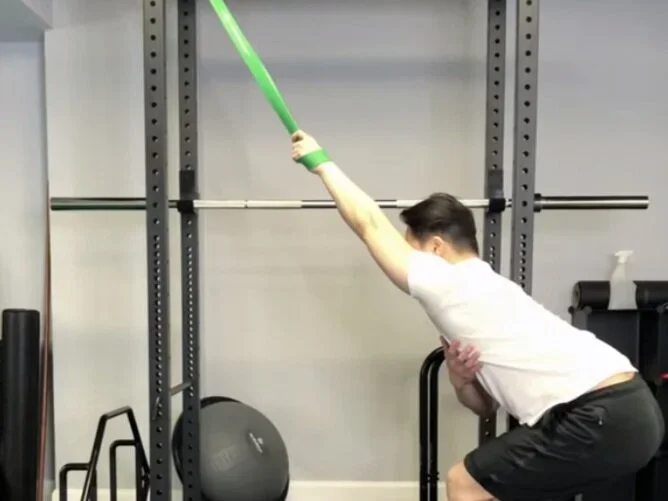
3. Banded Shoulder Distractions
Use a light resistance band to restore shoulder mechanics and create space in the joint.
Helps reduce tension in the traps and improve overhead position.
4. Diaphragmatic Breathing
Practice belly breathing to reduce tension in the accessory neck and back muscles.
Breathe in through your nose, letting the belly expand, then exhale slowly. Do this for 2–3 minutes.
Other Ways to Relieve Upper Back Pain:
Move more throughout The day
Your upper back was designed for motion, not hours of sitting. One simple and effective ways to reduce pain is to MOVE. Aim for at least 8,000 steps per day, even short bursts of movement—like walking around the block, shoulder rolls, or cervical retractions. Try adding mobility into your existing habits: stand up during phone calls, stretch while watching TV, or do a few wall angels between emails.
Have a mobility-friendly workspace
You don’t have to redo your entire office to improve posture. Small changes can make a big difference. Try alternating between sitting and standing. Use props like cushions or a yoga bolster to make it more comfortable. If you’re at a desk, be mindful of monitor height, arm support, and lumbar positioning. Your environment should support—and not sabotage—your spine.
Use soft tissue work as a tool not as standalone treatment
Soft tissue tools like massage guns, lacrosse balls, foam rollers, and heating pads can all offer quick relief for muscle tension and soreness. However, these should not be used as a stand alone treatment. Rather, these tools are only part of the equation. Soft tissue work helps to promote movement—BUT don’t stop there. Follow it up soft tissue and manual therapy with active range-of-motion exercises or isometrics to continue moving forward.
Want to take it one step further? Book a comprensive evaluation and treatment!
Book now